Aquatic Technology Pool & Spa, "Creating Water as Art."™

Aquatic Technology Pool & Spa, "Creating Water as Art."™
Pools as an art form - the way it should be!
Showing posts with label glass tile mosaics. Show all posts

Friday, December 11, 2015

Altoglass - another thermal shock compliance mystery

Recently a client inquired about using ALTOGLASS.COM glass mosaic tiles in their swimming pool.  The manufacturer's website promotes their tiles as appropriate for use in swimming pools.

But a review of the Technical Area on their website (http://www.alttoglass.com/tech.html) on 12/10/2015 revealed that they do not have any test results indicating compliance with ANSI A137.2 - Thermal Shock Standard for Glass Tiles.

Here is a screen shot of the technical data.
Click on image to enlarge


Thermal shock is not even mentioned.

Makes you wonder why it is not mentioned, since the thermal shock standard has been in existence for a few years?!

How can we endorse a product for use in our projects, if it does not meet their own industry standards?


Paolo Benedetti, SWD, Principal 
Aquatic Technology Pool and Spa 
www.AquaticTechnology.com 
 International Swimming Pool Consulting and Design, Aquatic Consulting, Watershape Consultants, Expert Witness, Hydraulic Design, Landscape Architecture, Construction Management 
Office: 408-776-8220 
 Email: info@aquatictechnology.com 
Major Markets Serviced: San Francisco, Palo Alto, Atherton, Hollywood Hills, Beverly Hills, Malibu, Los Angeles, San Diego, San Clemente, Pacific Palisades, Escondido, Scottsdale, Seattle, Phoenix, Tempe, Portland, Aspen, Vail, Park City, Chicago, Dallas, Houston, Austin, New Orleans, Madison, Detroit, East Hamptons, South Hamptons, Cape May, Ft. Lauderdale, Orlando, Raleigh, Chapel Hill, Cherry Hill, Toms River, Salt lake City, Boise, Denver, Santa Barbaara, Carmel, Carmel Valley, Monterey, Pebble Beach, Oceanside, Big Sur, Napa, Sonoma, Sausalito, Danville, Belvedere, Montecito, Palm Springs, Midland, Manhattan, Greenwich Village, Osaka, Paris, Madrid, Barcelona, London, Seoul, Sydney, New York, Tokyo, Cairo, Istanbul, Athens, Rome, Lisbon, Bonn.

Thursday, May 1, 2014

Glass Tile Swimming Pool Spa Designer saves hillside home.

A creative solution to a potentially ruinous situation saves a hillside home by installing a spa and patio area.

Initial Consultation

A young electronics entrepreneur asked me to come and meet with him about the possibility of designing a swimming pool or spa for his multi-million dollar home.

The beautiful home was build atop a hillside in the early 1960's.  Having recently completed a whole house remodel, the owner was now ready to tackle the backyard.

Myopic Contractors
 
The client knew that I had a reputation for being expensive.  He had already met with a number of pool contractors.  However, a quick walk around the property made him realize that I was  more than a pool contractor.
(click on image to enlarge)
Building stucco cracking
I noticed that the corner of the recently remodeled house had cracks in the stucco and foundation.  The trees on the slope had a slight downhill lean to them.
(click on image to enlarge)
Tilting trees were a clue to slope creep
None of the pool contractors had even noticed or mentioned these issues to the owner.  I knew that they were indications that the hillside was moving - a phenomenon known as slope creep.

Confirmation of Suspicions

Before the client committed to retaining my design services, I recommended that he hire a surveyor and a soils engineer.  Those experts could determine if the house was level, provide a topographical map that we'd need later and quantify the conditions of the soils and slopes.

The results were not pleasant.  One corner of the house was 3/4 of an inch out of level.  The lot was a combination of cut and fill.  The dirt cut out of the hillside was merely pushed around to create level areas.  No compaction or stabilization measures had been employed.

Turning Lemons into Lemonade

Our engineering team, quickly devised a conceptual plan, wherein we could stabilize the slope closest to the house and level the house using grout injection.

The best part is that the client would gain a spa, seating area and beautiful herb garden.

Heavy Construction

Caissons were drilled with a tracked excavator. 
Drilling caissons with a tracked excavator.
Then steel cages were lifted over the house with a large crane and lowered into place.  

Cages for drilled caissons
Crane lifting steel cages into place
These deep concrete and steel reinforced piers would stabilize the slope and prevent further movement of the house.  They would also support the new spa and patio.

Placing steel cages into the drilled holes
Picture Perfect

The net result was that the spa cost more than the client had intended.  However, the end results were picture perfect and the house was back onto a solid foundation.

Who wouldn't want to come home to this?
(click on an image to enlarge it)

Completed glass tile spa, flagstone patio and concrete bench.
The end of a perfect day!
Paolo Benedetti - Aquatic Artist "Creating water as art."™ 
Aquatic Technology Pool and Spa ©www.aquatictechnology.com 
You may contact Paolo Benedetti at: info@aquatictechnology.com or at 408-776-8220

Saturday, April 26, 2014

Cracks - Recycled glass tiles pools spas


The most frequent common denominator seen by expert witnesses when inspecting cracked mosaic glass tiles in swimming pools, has been the use of recycled glass as a raw material.

Beyond their control

Recycled glass is supplied to the tile manufacturers already ground up.  This ground glass is know as cullet.  The standards established by the recycling industry permit cullet to contain impurities.

The Glass Packaging Institute standards state:  "Some recycled glass containers are not able to be used in the manufacture of new glass bottles and jars or to make fiberglass. This may be because there is too much contamination or the recycled glass pieces are too small to meet manufacturing specifications.... This recovered glass is then used for non-container glass products. These "secondary" uses for recycled container glass can include tile, filtration, sand blasting, concrete pavements and parking lots."  

They are saying that contaminated cullet should be sent to glass tile manufacturers!

The processing of cullet attempts to remove impurities.  By their own admission, sifting, electromagnets and optical inspection does not remove the tiniest of impurities.  Small metallic particles are the most difficult to identify and remove.  Non-ferrous metals (stainless steel, nickle, copper, aluminum, magnesium, maganese) cannot be removed with magnets.  These very contaminates can be the very cause of cracking in finished tiles.

Chemical Balance

It is possible for tile manufacturers to chemically counteract the negative effects of some impurities, but not all - especially metals.

Metal Stones

Metal particles are referred to as "stones."  Over time, these stones change in structure.  These changes cause internal stresses within the tiles.  Eventually the stresses grow to the point where the glass cracks.  Microscopic in nature, they are virtually invisible to the naked eye and beyond the ability (or manufacturer's desire) to be detected.

Refractory brick commonly errodes from the walls of the kiln, and becomes a contaminate within the molten glass.  These are also called stones.  Future thermal changes to the tiles will cause cracking, due to the differential expansion of materials.
 

Recycled Glass - Warm Fuzzies and Headaches

Using recycled glass as a component of glass tile production lowers raw material costs and provides consumers warm fuzzies.

The probability of contaminates is too high and potential for failures too great, to justify the installation of recycled glass tile mosaics in a swimming pool.

There are many first quality glass tile mosaics on the market to select from, to even risk considering tiles utilizing recycled glass content.

Once tiles begin to crack, water will infiltrate and soften the thinset.  Sharp shards of loose cracked pieces of tile in a pool or spa pose a threat to bathers.

The cost to remove glass tile, repair the substrate and membrane and reinstall new tile is double the cost of a new fresh installation.

Roll the dice or make a sure bet... the choice is yours.

Paolo Benedetti - Aquatic Artist 
"Creating water as art."™ 
Aquatic Technology Pool and Spa ©www.aquatictechnology.com 
You may contact Paolo Benedetti at: info@aquatictechnology.com or at 408-776-8220

Tuesday, April 8, 2014

Malibu Beverly Hills Swimming Pool Design Expert

Paolo Benedetti announces the completion of another commissioned swimming pool design project.  

This glass tile mosaic perimeter overflow pool, is situated in the mountains above Malibu, CA, overlooking the Pacific Ocean on the horizon.

(click on image to enlarge it)


The spa was situated below the pool, to take advantage of the views and privacy.

(click on image to enlarge it)

The blue glass tile mosaic interior was expertly installed by Jimmy Reed of Rock Solid Tile.
The exterior of the pool and spa were clad with Corten steel panels. 

Call us today at 408-776-8220 to commission your own unique architecturally designed watershape.  Commissions are currently being accepted nationally and internationally.


Paolo Benedetti - Aquatic Artist 
"Creating water as art."™ 
Aquatic Technology Pool and Spa 
©www.aquatictechnology.com 
You may contact Paolo Benedetti at: 
info@aquatictechnology.com or at 408-776-8220

Monday, March 31, 2014

Swimming Pool Glass Tile Expert Cracking Wine Country

Another game of "blame the installer."

The bottom of the totem pole

The poor tile installer is always at the end of the pecking order.  And the recycled glass tile mosaic manufacturers know that these people have the fewest resources to defend their case.

Business Ethics?

As long as a recycled glass tile mosaic manufacturer continues to produce products that cannot withstand temperature gradients (thermal shock), their glass tiles will continue to crack.

Once the tiles are installed, they can blame an improper installation.  

But what if the same tiles are left unmounted in a tupperware pan in the swimming pool?  What if those same tiles crack, though they are unmounted?  Can't blame the installer.... hmmm.

Cracked Glass Tiles

Show me any 2 year old installation of glass tile mosaics made with recycled content, and I'll be able to locate cracked tiles.  
Click on the image to view the cracking in these 4x4 glass tile mosaics.  They are from the same recycled glass tile manufacturer as the small 1x1 tiles in the image below.

Yet, there are countless installations of glass tile mosaics that contain nothing but virgin materials, that are in a pristine condition.  Hmmm...

Buying recycled might be savy, but buying Virgin is smarter !

Purchasing glass tile mosaics that contain recycled content may be trendy and hip.  But chipping out broken glass tile mosaics is far from glamorous.  All of those broken glass tiles end up in the landfill anyway, along with the mortar bed, thinset and grout.... not to mention the time, agony and money.  Those glass tiles cannot be recycled again with all of those contaminates.  How is that GREEN?

Inherent manufacturing flaws, broken edges and surface imperfections - any may contribute to cracking.  Click on the image to enlarge it and to view the random cracking up close.

Therefore, virgin materials of the first quality are actually more environmentally savy.  They are destined to remain in their installed state for years, staying out of the landfill.

Paolo Benedetti - Aquatic Artist 
"Creating water as art."™ 
Aquatic Technology Pool and Spa ©www.aquatictechnology.com 
You may contact Paolo Benedetti at: info@aquatictechnology.com or at 408-776-8220

Thursday, December 12, 2013

Discoloration Glass Tile Mosaics

Expert Witness Glass Tile Mosaics Installations
 
Glass tile installations cost a lot of money.  Let's face it, if it was inexpensive to install glass tile mosaics properly, then everyone would have glass tile mosaics.  They are the most luxurious finish available for swimming pools and spas.

Glass Tile Gone Wrong

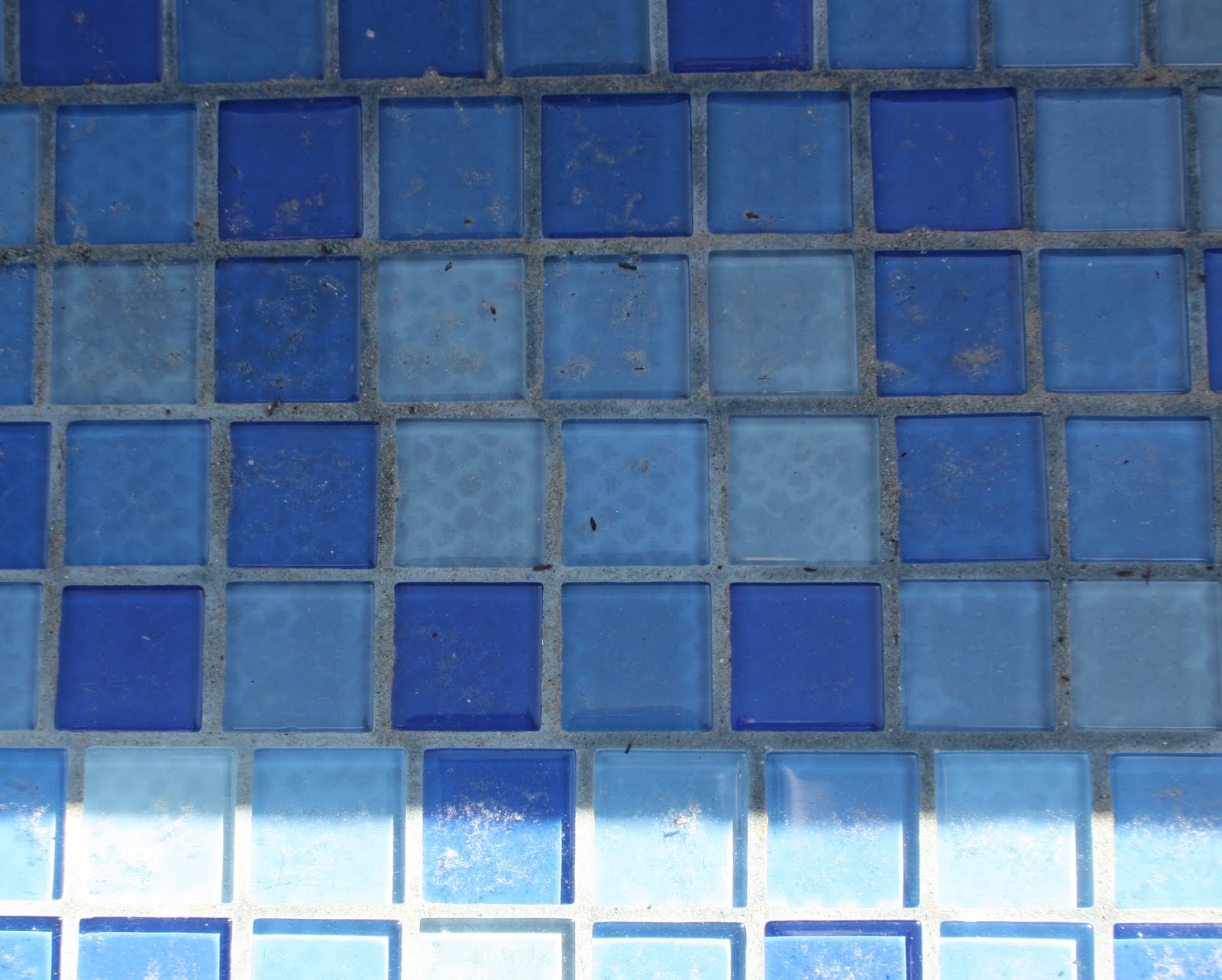
A glass tile mosaic job can look terrible when done wrong.  Most problems are caused by installation errors.  Compounding the problem, are the use of translucent (see through) glass tiles.  They permit the installation errors, normally hidden by ceramic tile, to shine through!

Causes of Discoloration
The most common causes of discoloration behind glass tile mosaics are a result of:
  • using gray cement, mortars or setting materials
  • not keeping the tiles shaded until the pool is filled
  • failing to protect the tiles from rain or irrigation water
  • allowing the bond coat to skin over (poor bond, voids)
  • excess water in the bondcoat (thinset)
  • incorrectly using the direct set (two step) installation method
  • leaving trowel marks
  • grouting too soon (not allowing the bondcoat to fully cure)
  • filling the pool too soon after grouting
  • fielding mixing setting materials (results in unknown bond and compression strengths, density and permeability)
  • not using a waterproof membrane
  • too thin of a bondcoat (allowing the membrane to shadow through)
  • allowing ground water to soak through the pool shell 
  • contamination in the bondcoat
These are just some of the most common mistakes.  Individually or in combination, they can result in a beautiful pool turning into a hideous mess.

Workmanship Standards

In North America there are published and accepted workmanship standards.  These standards are the minimum that apply to the installation of glass tile mosaics.  So, regardless of what installation method the tile manufacturer or contractor recommends, THESE ARE THE MINIMUMS.

Foreign manufacturers are not aware that the tile industry in North America has performed significant testing and analysis if glass tile mosaic installation practices.  They have established acceptable methods of installing glass tile mosaics that apply to EVERY INSTALLATION in North America.  They are the GOSPEL for glass tile installations.

These practices are published under the ANSI A108.14, A108.15 and A108.16: Standards for the Installation of Glass Tile Mosaics.  They also make direct reference to the quality and performance standards for the required mortar beds, waterproof membranes, bondcoats (thinsets) and grouts (ANSI A118).

Because there are performance standards for the mortarbeds, thinsets (bondcoats) and grouts, the field mixing of raw materials cannot guarantee that they meet the ANSI performance standards.

Paolo Benedetti - Aquatic Artist 
"Creating water as art."™ 
Aquatic Technology Pool and Spa ©
www.aquatictechnology.com 
You may contact Paolo Benedetti at: 
info@aquatictechnology.com or at 408-776-8220

Wednesday, March 7, 2012

Baptismal Font - Architectural Masterpiece

Paolo Benedetti, the principal of the aquatic consulting and watershape design firm of Aquatic Technology Pool and Spa, proudly reveals another architectural masterpiece... the baptismal font for Saint Benedict's Roman Catholic Church.

Desperate Need of Repair
Though the original font was only 10 years old, shoddy workmanship by the original builder had cause significant damage to the surrounding floors. Though an initial attempt was made to waterproof the font, it was haphazard at best. Water was seeping up through the surrounding floors, causing a slippery and dangerous condition. As a result the, the font was drained and left empty.

Lack of Thought in the Design
The architect's original design lacked any thought into the architecture of the building, the space to be occupied, the acoustics or the practicality of actually using the font. Situated in the entry foyer of the Church, the font is the focal point on upon entering the building.

The original font had a three foot diameter aluminum bowl with a spillway that spilled water from a height of four feet into the lower pool. The sound of the falling water was amplified by the stucco foyer walls and it echoed through the Church. The annoying background noise urged parishioners to use the restrooms during mass. The diameter of the bowl was so small, that infant baptisms could not be performed, as the Priest, Parents and God-Parents could not fit into the space around the aluminum bowl. And, anyone who has ever worked around chlorinated water will tell you... chlorine eats aluminum! The upper bowl quickly developed leaks and became a myriad of assorted patches and repairs.

Access to the lower font's pool was always cumbersome and awkward, as it lacked an external step, hand railings and the internal steps varied in height by over two inches.

The New Design
Paolo was given carte blanche with new design. He proposed a much larger upper bowl, of a cubic design, better fitting with the building's rectilinear lines and mission architecture. The larger bowl would allow larger crowds to access the font at the beginning and end of mass. The height was established to provide access to the wheelchair bound that desired to bless themselves upon entry to the Church. The larger size would also allow infants to actually be baptized in their own parish Church! To assist with infant baptisms, the curbing of the upper cube was designed to be one foot wide, so that infants could actually be laid upon the rim if necessary.

The green slate that lined the inside & outside of the lower pool would be stripped. The ineffective waterproofing and loose mortar bed would be jackhammered off of the walls and floor. The upper and lower fonts would be finished with a custom gradient blend of Italian glass tile mosaics from Bisazza Mosaicos, Vicenza, Italy.

The hand railing from the adjacent stairs would be relocated into the top of the lower pool wall, so that it could provide assistance to both the users of the font and the external stairs. The internal steps of the font would be adjusted, so that they would be of equal height. Additionally, the singular drain was modified into two balanced drains and a vacuum port for maintenance was added. Exterior floor drains were relocated to allow for the installation of the access steps and the upper font cube.

The spillway was redesigned to function as a "wet wall" off of the corner of the cube. Being narrower on the inside & wider on the outside, the spillway's design will create the optical illusion that the water is not level on the top of the spillway.

A bronze statue of the ascending Christ that the Church had in an outer entry, was to be relocated to a commanding position atop the cube. The natural lighting of the overhead skylights would shine upon this space during the day. Overhead lighting was modified to highlight the statue and to accent the shadow lines of this dramatic art piece.

Theology of the Design
Though significant thought went into the redesign of the physical attributes of the reconstructed font, the real importance of the design is found in the use of colors, materials and their placement:

The bronze statue of the ascending Christ occupies a commanding position atop the upper font, gazing through the skylight towards heaven above.
A gradient blend of glass tile mosaicos originates with a blend of blacks & grays and transforms to a blend of yellows - baptism in Christ's name is leaving one's sinful past behind (blacks/grays) and signifies the dawn of a new life (sunrise/yellows).
The upper bowl (cube) is a blend of whites and opalescent pearls... infants that are baptized here are free of mortal sin (purity/white).
A smattering of 24 karat gold leaf mosaic tiles spill from the statue of the ascending Christ, over the spill way & cascade onto the floor of the lower font.... Christ is the source of our everlasting life.
The entry step contains a few yellow tiles... there is a little good in everyone, no matter how evil they may be.
A singular gold leaf mosaic tile is on the yellow exit step... Christ will forever be with those who are baptized & walk in his name.
The shadows from the hands of the ascending Christ touch both the black entry step and the yellow exit step... Christ will guide those baptized in his name through life.


(CLICK ON THE IMAGES TO SEE A LARGER VIEW)


Paolo Benedetti - Aquatic Artist
"Creating water as art."™
Aquatic Technology Pool & Spa©
www.aquatictechnology.com

Thursday, November 10, 2011

Glass Tile Mosaic Pools, Spas & Waterfeatures - ONLY Use Quality Glass Mosaics

Having a glass tile mosaic infinity, vanishing, horizon, disappearing, knife edge pool, spa, watershape or fountain is all the rage... But Aquatic Consultant Paolo Benedetti of Aquatic Technology warns that buyers need to beware, as the marketplace is awash in shoddy materials and poor workmanship.

Cheap is not Good
When it comes to glass tile mosaics, there is no such thing as an inexpensive high quality tile. I have inspected over 40 projects that had some type of glass failure. I am personally aware of at least another 50 - people who, for whatever reason, chose not to hire me to evaluate their issue(s). They were kind enough to forward pictures, samples and installation images.

In every case, the defects were attributable to a combination of poor quality glass tiles. If questionable installation practices were employed, the problems only compounded themselves.

Glass tile mosaics from the home improvement warehouse stores, internet, close-outs or cut-rate tile contractors that sell for under $10 per square foot, are almost always to blame. A recent $20+ million dollar estate that I visited, had thousands of square feet of $2 per square foot glass tiles installed. Where's the mentality in that?

Internet
There are literally thousands of companies on the internet hawking glass tile mosaics. "Quality glass tile $4.99 / sq ft" reads a leading search results. Of course they're not going to say, "Cheap prices, Cheaper Quality Glass Tiles from $4.99 / sq ft," but they should!

Some of these vendors are actual manufacturers, while others are merely middlemen or distributors. Most people look at samples, and because it looks like a name brand tile, they automatically assumes that it is of the same quality. This assumption could not be further from the truth!

While we'd all love to have our surrounding done in the most lavish materials possible, the simple fact is that quality glass tile and it's proper installation is EXPENSIVE - VERY EXPENSIVE! I'm in the trades, and I don't even have a swimming pool lined in glass tile (though my spa is!).

Quality glass tile mosaics start around $15 per square foot and go upwards from there! A simple blend of Italian glass tiles mosaics can easily cost $20-40 per square foot. And, these blends are their standard blends, ones that they do routinely, already have the graphics computed and maintain in inventory.

Select a custom blend of tiles from their color palette and the cost can run $40-60 per square foot, depending on the colors & complexity of the blend. Choose ORO (24K gold leaf sandwiched between layers of glass) and the cost rises exponentially - upwards of $750 per square foot (depending on the current market price of gold).

Inferior Manufacturing Procedures
I've previously discussed the methods used by various glass tile manufacturers employ to reduce their production costs: firing temperatures, annealing, blending, raw materials, recycled materials, double firings and contaminates. So, I'm not going to discuss those again here.

Besides the shortcuts employed during the actual making of the glass, there are other means of reducing their costs. The lack of initial quality control, ongoing random quality control inspections & testing and the tracking production lots are the most prevalent. Many do not even possess testing facilities or employ outside laboratories.

Color
There are a couple of methods of coloring glass tiles. The most common is the use of chemicals and oxides to actually change the color of the glass. Because the color is throughout the material, any chip or scratch will not change the perceived coloration. This is the oldest and most proven method of coloring glass and dates back to before the ancient Romans. The leaders in this field are Lightstreams, Bisazza and Sicis (Lightstreamsglasstile.com, Bisazza.com, Sicis.it).

Applying a colored coating to the reverse of a layer of clear glass is the second most common method of coloring tiles. The best method of achieving this is to actually melt 2 layers of glass together, a clear layer atop a colored layer. The colored layer does not need to be thick. These tiles have a very contemporary look and a great sense of depth, as there is a layer of clear glass on top of the actual color. The layer of clear glass can vary in thickness, depending on the manufacturer. However, the thicker the tile, the greater the potential that each tile will contain inherent stress, that will cause the tile to crack in the future.

Another method of back coloring clear tiles is to melt a coating onto the glass. There are a few companies that have refined this process and manufacture a high quality product. Interstyle (interstyle.ca) of Canada is one such company.

But, there are a lot of knock-offs that try to emulate the appearance of these products from these quality manufacturers. The most common is the of recycled glass and the lack of quality control Refer to my prior articles about the dangers of utilizing recycled glass - while it is "green" it poses a serious financial risk to the installer & purchaser!

An attempt to back color clear glass has been attempted through the use of hand painted, silk screened, or sprayed on paint type of coatings. Anyone with a brain can surmise out that these coatings are not going to stay bonded to the smooth glass surface for long.

Another inferior process is a glued on backing. Because none of these companies ever bothered to perform accelerated failure testing of their materials, they have no idea if the backing will stay attached to the glass tile. Many don't even know if the adhesives they use are even waterproof! Place these tiles into a submerged application such as a swimming pool and in a few years you'll have a delaminated mess. Sometimes the colored backing itself is water soluble. Okay for a back splash, but in a shower, bathtub, fountain, swimming pool or spa you quickly have tiles popping off or letting loose - sometimes in big sheets.

(Color backing on the left has separated, darker ones on right are still bonded. Dark thinset highlighted mesh backing.)

Spacing Mesh (aka: mesh backing)
Oftentimes as the backing begin to fail, the mesh backing on the tiles starts to become visible. This is most evident on clear or translucent tiles, since you can actually see through the entire tile. This exactly why quality manufacturers of clear or translucent tiles do not use mesh backings - they can show through the tiles - even without any type of failure.

The mesh backings are merely designed to maintain the spacing between the tiles during installation. They are not designed to adhere the tiles to the substrate. But a poor quality backing can cause bonding issues. Backings that are too large, do not allow for the 90% contact with the thinset that is required by the standards. Plastic dot backings are the worst of these offenders.

(Mesh covers a large percentage of surface, improper use of dark thinset highlights the mesh. Note: poor alignment of the grout lines).

Personally, I prefer paper faced or plastic film faced tiles. Once set into place, the facing paper of plastic film is removed - there is absolutely nothing to interfere with the tile's contact with the thinset. Over the years, I have seen countless ceramic, stone and glass tiles delaminating from projects because the mesh backing was glued on with a soluble glue. As the glue dissolves and releases, it also causes the thinset to lose it's bond - and the tiles begin to fall off.

The Solution ? Replace the Tiles
Chipping glass tiles from a swimming pool shell is one of the messiest and potentially dangerous jobs in our industry. Shards of glass fly everywhere. Though protective gear is worn, vacuums and pressure washers are employed, small invisible shards seem to spread everywhere. Inevitably barefoot people seem to locate every glass shard around the pool for months following a projects reconstruction.

Installation Costs
Proper preparation, waterproofing and installation for a swimming pool is presently running around $80 per square foot (retail). Contractors who do the installation themselves with trained crews can expect their labor and material costs to be around $55-60 per square foot.

If the project has a lot of details that require a lot of trimming of tiles around jets, fittings, stairs, or circular vessels (e.g. round spas or fountains), then expect to pay on upwards of $100-125 per square foot. Meticulous details take time. And time is money!

You should expect and receive quality... compare some installations below. You can easily spot the quality VS the hacks!

( Click on an image to enlarge it)


YOU ONLY PAY ONCE FOR QUALITY!

Paolo Benedetti - Aquatic Artist
"Creating water as art."™
Aquatic Technology Pool & Spa©
www.aquatictechnology.com