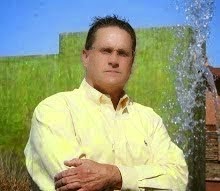
Internationally recognized swimming pool designer, Paolo Benedetti discusses how he got started designing & building the world's most exotic swimming pools.
A few years ago Paolo was asked to comment as to how he got started in the swimming pool industry.
So, How did you get started in the swimming pool industry?
I made a career move almost 20 years ago. Having had a contractor's license in another trade, possessing the desire to manage my own business, and wanting to utilize my business degree, I purchased an existing pool service company that catered to the affluent estates in the Silicon Valley and on the San Francisco Peninsula.
I quickly realized that managing a "pool janitorial" firm was not my cup of tea. Though I ran a very professional company, the clients did not hold the employees in great regards ("the pool guy" they'd all hear). I also realized that most of the pools that we serviced, were improperly plumbed and constructed using "marginally acceptable" practices. This was primarily because most consumers had been taught to "get 3 bids & to shop price." But consumers don't realize that construction, is not a consumer commodity like a TV or washer/dryer.
Those of us in construction know that there are different levels of workmanship... I realized that there was no one who was actually designing or building top tier vessels. So, I quickly evolved the firm into a remodeling & construction firm, selling off the service division. After realizing that remodeling meant that I had to inherit other builders' inferior structures, I began to focus exclusively on new construction. We still perform remodeling projects, but they must be extensive in nature.
I was confounded as to how a property owner of financial means ended up with such a lousy pool. I came to realized that most developers, general contractors, architects & landscape architects were in the "3 bids" mode... and that breaking that "compete on price" mindset was going to be impossible. I kept hearing "all pools are the same." This only reinforced my theory that they did not possess the knowledge to make a truly informed decision. Someone needed to provide them with the skills to correctly specify the design & construction details of an exotic swimming pool, so that they would not continue to rely upon the "low bidder" to "design-build" from a conceptual sketch (the proverbial "blind leading the blind").
So, I began designing and specifying my own projects. I began consulting with a select group of architects, landscape architects, and designers who relished someone with an education, who was articulate and possessed a knowledge of hydraulics, proper construction practices, architecture, art and world history. Most of those that I routinely work with now, will just set aside an area for the pool or water features. I am then just turned loose with the client. They know full well that what I propose will work with the site, the architecture, and the client's position in life.
I now focus primarily on design & consulting. I build out and manage a select few projects, wherein the clients appreciate a "no holds barred" approach to construction... a "we're doing it right, or we're not doing it" attitude.
Who are the primary influences upon your design style?
The primary influences of my design style have been a direct result of my personal fondness of contemporary architecture. While I can deliver older traditional styles, I usually infuse them with "clean details" (by removing the visual clutter and support apparatus routinely visible in so many projects). I frequently draw on my international travels and studies of art and architecture, to innovate ideas or features that I have seen. I now make it a point of venturing afield while on business trips to Europe, the Middle East, or Asia. I always add on a few days to explore the various museums, ancient sites, history & architecture, at least twice a year. I have also been influenced by the architecture of Legorreta, Barragan, Lautner, and Botta.
What does your pool look like and can you show us a picture?
My personal pool was heavily influenced by the works of Legorreta. It is rectilinear, has massive intersecting planes (walls) with water falling from them. The materials & colors are surprising, yet work wonderfully with the various structures on the site. I'm sorry, though it has been completed for years, I have chosen to keep it as an "unpublished work."
How did you become involved with the Genesis 3 Design Group?
I was "doing my own thing" in Northern California, as one of my friends said so eloquently, "a Don Quixote jousting at windmills." He had attended the very first Genesis 3 Design School. After that school, he said, "my company cannot build to those standards, but they are right up your alley!" I was glad to hear that there were some other like minded individuals, who enjoyed pushing the envelope of their creativity. Folks who relished being the "first" at developing some aspect of a project. I took one of the following Genesis 3 Level I Design Schools & it's all been down hill from there!
All kidding aside, I was relieving to find a group that promoted quality before price, design above computer programs & templates, and uniqueness above volume.
From those humble beginnings as a service company owner, I now perform international design & builds, perform consulting services and forensic case studies, and provide expert witness assistance to property owners. And, now I get to select the clients that I work for.... Over the years, I have actually told some "heavy hitters" that I wasn't interested in working for them. Primarily because they wanted to play me like a "yellow page cookie cutter pool builder" and not the passionate design professional that I am.
They didn't possess the passion to "create water as art" and therefore were not worthy of my efforts... or possessing that "part of me" that I leave behind on their property.
Today, I also consult for other swimming pool contractors who possess the salesmanship skills, but who lack the education, experience, knowledge or creativity to execute these complex projects and effectively resolve design issues.
Paolo Benedetti - Aquatic Artist
"Creating water as art."™
Aquatic Technology Pool & Spa ©
www.aquatictechnology.com
Aquatic Technology Pool & Spa, "Creating Water as Art."™

Pools as an art form - the way it should be!
Monday, February 28, 2011


Friday, January 14, 2011
Why most FAUX rockwork look like FAKE ROCKS!
International pool designer Paolo Benedetti, discusses why FAUX rock work looks FAKE and CONTRIVED....
SETTING
Personally, I do not do a lot of rock work, either natural or faux. WHY? Because most clients who want a grotto, volcano, rock formation or waterfall on their property do not have the correct setting. "Setting" you ask? Yes, most pools and homes are built on flat lots.
To make a rock formation appear natural, it must look like it belongs. Have you ever seen a 20 foot high pile of boulders in the middle of a meadow with water bubbling out of the top of it? RARE!! And if there is water bubbling out of some rocks, more than likely the rocks will be small and almost unnoticeable.
It all comes down to the SETTING! Call me a purist, a perfectionist, or an arrogant bastard.... I refuse to put my name or efforts onto something that looks so contrived.
To make matters worse, most poolside waterfalls are so out of scale with the yard that they either look like a wheelbarrow load of rocks left on the edge of the pool by the landscape firm, or an enormous dump truck load of boulders piled to the sky without any rhyme or reason.
The few rock feature pools that I have designed or built, were on lots that sloped up and away from the house. This allowed me to incorporate the rock work into the hillside. It also allows me to create what appears to be the natural source for any waterfalls or flowing water. By creating a stream that begins above the pool's rock formation, the waterfall at the pool appears to be a natural rock out cropping.
QUALITY MATERIALS
Quality work starts with quality materials. To achieve the most realistic looking rock waterfalls, one must work with realistic materials. The MOST realistic that you will ever find are REAL rocks & boulders... PERIOD! If a client's budget allows, I always will specify real rocks and boulders.
Quality faux rocks are cast from real rocks. Rocks that are "carved on site" look like just that - carved concrete. It is impossible to create the natural cleft, cleavage, and striations that occur in nature in the short time the artisan has before the material begins to harden.
Prepackaged "kit" waterfalls, will end up looking like just that... a KIT! In order to make one of these believable, you will need to do a lot of work around the outside of it. And do not think that your minimally build pool can support the additional tens or hundreds of tons weight on the edge without cracking. These ARE NOT something that you can just "add to your pool" (REGARDLESS OF WHAT THE ADS OR SALESMEN SAY - don't do it!). Talk to a structural engineer.... the pool needs to be designed for it. Most backyard pools are not of sufficient structural strength to support any additional surcharges (this is why they apparently crack for no reason - they are as thin as the pool builder could get away with).
A combination of real and faux rocks can help most mid-level projects meet their budgetary constraints. Natural boulders are placed up close to the entertainment areas and where people are the most likely to climb on them. Faux boulders and rock formations can be placed in the background, up high, and in inaccessible areas.
PLACEMENT
Just because quality materials are being used, does not guarantee that the project will achieve stardom. Most projects look contrived because the person in charge of placing the boulders and faux rock panels does not have an understanding of geology and rock formations.
This is not rock-et science. In fact a Jr. High school aged kid could do it. What it takes is the time to stop and observe rock formations in nature. We are trying to mimic mother nature.... so follow her lead.
Most of the boulders that you see in nature (other than those that have rolled down onto the edge of the highway) are buried! What you usually observe is the top 1/4-1/3 of the boulder. But because people are paying by the ton for these HUGE boulders for their yard, no one ever wants to bury most of them.
The simple solution... SPLIT THEM! Duh. Then you actually have doubled the quantity of boulders you have to work with, and saved yourself a lot of labor digging a hole to place it in. It doesn't matter what the split side ends up looking like, does it?? After all this is the side that you're going to put down onto the ground (or maybe buried shallowly).
Piles of rocks in nature usually only occur beneath a larger rock formation... after all, they had to fall from somewhere! So placing a pile of boulders in a yard will almost always appear fake and unnatural. To achieve a natural appearance, requires that either a larger formation is placed uphill from the "rock pile," or a cliff face is created. Either of these techniques can work. The cliff face technique appears more natural when retaining walls are required to shore up steep inclines.
FOOLING THE MIND'S EYE
A true rock artist will be in tune with the natural formation, the angles of the fissures, and the natural "breaks" of the stone. They will incorporate small details that will draw the viewers brain into believing that everything that they see is real.
These details include small pebbles, gravel, and sand set into crevices fissures. Tree roots growing out through the face of cliffs. Plants growing on ledges and plateaus. These elements add to the believability of the rock formation. Even water weeping out of the cliff face, adds an "element of truth."
I'm not going to address the need for structural engineering, supervision of the rock structure construction by the structural engineer, water proofing (which is an ongoing process from the foundation, back fill, curing, sealing, and in the manufacturing of the actual faux rock panels). If your "rock guy" doesn't understand the need for these (or rationalizes them away), then he's a schlock & a charlatan!
When completed, the faux rock work will be very close in appearance to the real boulders that are incorporated into the project. They should last a lifetime without cracking or crumbling.
Be prepared to re-color or re-texture the faux boulders, as over time the finishes will fade due to the exposure to the UV, pool chemicals, and water.
As my rock artists loves to say...
ROCK ON!
Paolo Benedetti - Aquatic Artist"Creating water as art."™Aquatic Technology Pool & Spa©www.aquatictechnology.com
SETTING
Personally, I do not do a lot of rock work, either natural or faux. WHY? Because most clients who want a grotto, volcano, rock formation or waterfall on their property do not have the correct setting. "Setting" you ask? Yes, most pools and homes are built on flat lots.
To make a rock formation appear natural, it must look like it belongs. Have you ever seen a 20 foot high pile of boulders in the middle of a meadow with water bubbling out of the top of it? RARE!! And if there is water bubbling out of some rocks, more than likely the rocks will be small and almost unnoticeable.
It all comes down to the SETTING! Call me a purist, a perfectionist, or an arrogant bastard.... I refuse to put my name or efforts onto something that looks so contrived.
To make matters worse, most poolside waterfalls are so out of scale with the yard that they either look like a wheelbarrow load of rocks left on the edge of the pool by the landscape firm, or an enormous dump truck load of boulders piled to the sky without any rhyme or reason.
The few rock feature pools that I have designed or built, were on lots that sloped up and away from the house. This allowed me to incorporate the rock work into the hillside. It also allows me to create what appears to be the natural source for any waterfalls or flowing water. By creating a stream that begins above the pool's rock formation, the waterfall at the pool appears to be a natural rock out cropping.
QUALITY MATERIALS
Quality work starts with quality materials. To achieve the most realistic looking rock waterfalls, one must work with realistic materials. The MOST realistic that you will ever find are REAL rocks & boulders... PERIOD! If a client's budget allows, I always will specify real rocks and boulders.
Quality faux rocks are cast from real rocks. Rocks that are "carved on site" look like just that - carved concrete. It is impossible to create the natural cleft, cleavage, and striations that occur in nature in the short time the artisan has before the material begins to harden.
Prepackaged "kit" waterfalls, will end up looking like just that... a KIT! In order to make one of these believable, you will need to do a lot of work around the outside of it. And do not think that your minimally build pool can support the additional tens or hundreds of tons weight on the edge without cracking. These ARE NOT something that you can just "add to your pool" (REGARDLESS OF WHAT THE ADS OR SALESMEN SAY - don't do it!). Talk to a structural engineer.... the pool needs to be designed for it. Most backyard pools are not of sufficient structural strength to support any additional surcharges (this is why they apparently crack for no reason - they are as thin as the pool builder could get away with).
A combination of real and faux rocks can help most mid-level projects meet their budgetary constraints. Natural boulders are placed up close to the entertainment areas and where people are the most likely to climb on them. Faux boulders and rock formations can be placed in the background, up high, and in inaccessible areas.
PLACEMENT
Just because quality materials are being used, does not guarantee that the project will achieve stardom. Most projects look contrived because the person in charge of placing the boulders and faux rock panels does not have an understanding of geology and rock formations.
This is not rock-et science. In fact a Jr. High school aged kid could do it. What it takes is the time to stop and observe rock formations in nature. We are trying to mimic mother nature.... so follow her lead.
Most of the boulders that you see in nature (other than those that have rolled down onto the edge of the highway) are buried! What you usually observe is the top 1/4-1/3 of the boulder. But because people are paying by the ton for these HUGE boulders for their yard, no one ever wants to bury most of them.
The simple solution... SPLIT THEM! Duh. Then you actually have doubled the quantity of boulders you have to work with, and saved yourself a lot of labor digging a hole to place it in. It doesn't matter what the split side ends up looking like, does it?? After all this is the side that you're going to put down onto the ground (or maybe buried shallowly).
Piles of rocks in nature usually only occur beneath a larger rock formation... after all, they had to fall from somewhere! So placing a pile of boulders in a yard will almost always appear fake and unnatural. To achieve a natural appearance, requires that either a larger formation is placed uphill from the "rock pile," or a cliff face is created. Either of these techniques can work. The cliff face technique appears more natural when retaining walls are required to shore up steep inclines.
FOOLING THE MIND'S EYE
A true rock artist will be in tune with the natural formation, the angles of the fissures, and the natural "breaks" of the stone. They will incorporate small details that will draw the viewers brain into believing that everything that they see is real.
These details include small pebbles, gravel, and sand set into crevices fissures. Tree roots growing out through the face of cliffs. Plants growing on ledges and plateaus. These elements add to the believability of the rock formation. Even water weeping out of the cliff face, adds an "element of truth."
I'm not going to address the need for structural engineering, supervision of the rock structure construction by the structural engineer, water proofing (which is an ongoing process from the foundation, back fill, curing, sealing, and in the manufacturing of the actual faux rock panels). If your "rock guy" doesn't understand the need for these (or rationalizes them away), then he's a schlock & a charlatan!
When completed, the faux rock work will be very close in appearance to the real boulders that are incorporated into the project. They should last a lifetime without cracking or crumbling.
Be prepared to re-color or re-texture the faux boulders, as over time the finishes will fade due to the exposure to the UV, pool chemicals, and water.
As my rock artists loves to say...
ROCK ON!
Paolo Benedetti - Aquatic Artist"Creating water as art."™Aquatic Technology Pool & Spa©www.aquatictechnology.com
Subscribe to:
Posts (Atom)


 Posts
Posts

